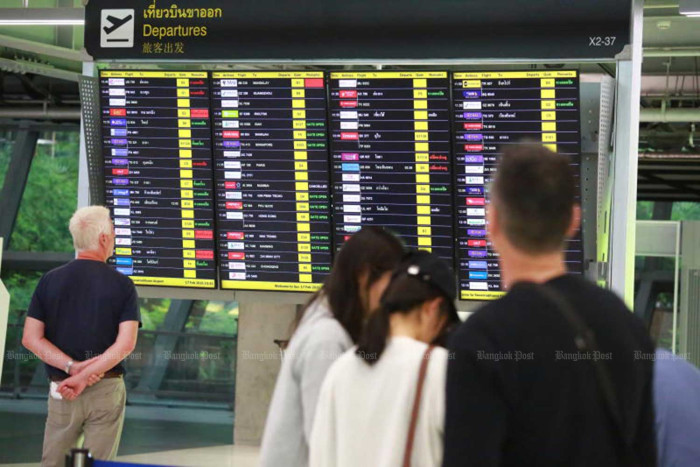
Thailand överväger att införa en ny skatt på 1 000 baht för personer som lämnar landet med flyg

 
Hej


Thai Tourism Could Lose Far More Than Proposed 1000 Baht Departure Tax Would Raise, Airlines Warn​

Friday, 16 October 2026, 0:17


– Thai tourism could lose 50–150 billion baht a year in revenue if the proposed 1,000-baht air departure tax is introduced, against an estimated 45.9 billion baht the levy itself would collect.​

– The figures come from Association of Thai Travel Agents honorary secretary-general Adith Chairattananon, drawing on international studies of how tourism taxes affect demand.​

– Airlines, through the Airlines Association of Thailand, have opposed the tax, citing poor timing while the economy is fragile and the risk that higher costs will undercut competitiveness against destinations such as Vietnam.​

– The draft remains under consultation until the 29th of October and has not been enacted. Hotels and travel agents have already formally objected.​


Mvh isan lover
 
Jag visade sambon detta, hon hade ganska hårda ord, även om det inte är några stora belopp så kommer det troligen att slå tillbaka på landets turism, vi får väl se hur det ser ut när det kan bli aktuellt för en ny resa till området men det kommer nog att dröja 4-5år innan dess.
 
Hej

Departures tax pushed by the Ministry of Finance is the death kiss for the tourist sector say top execs​

October 16, 2026 at 10:27 pm

Thai AirAsia sounds the alarm over a ฿1,000 departure tax as Thailand’s tourism recovery stalls again and dives. Foreign arrivals reach just 23.94 million, ASEAN demand drops 20%, and travel agents warn of ฿150 billion in lost spending. Yet more taxes are on the table for an industry that never recovered from the 2020 shutdown.​

Thai AirAsia chief Tassapon Bijleveld warns that Finance Minister Ekniti Nitithanprapas’s proposed ฿1,000 departure tax threatens international flights and Thailand’s ailing tourism industry. Travel agents fear losses of up to ฿150 billion annually against projected tax collections of just ฿45.9 billion. Meanwhile, foreign arrivals have reached only 23.94 million, with weekly numbers falling 7.49%. Tourism receipts remain ฿360 billion below 2019 levels, while ASEAN arrivals have plunged 20%. Yet the government is considering another ฿450 tourist entry fee. With consultation closing on 29 October, airlines and tourism operators are challenging plans to impose fresh charges on an industry still struggling to recover from the draconian COVID-19 shutdown in 2020.
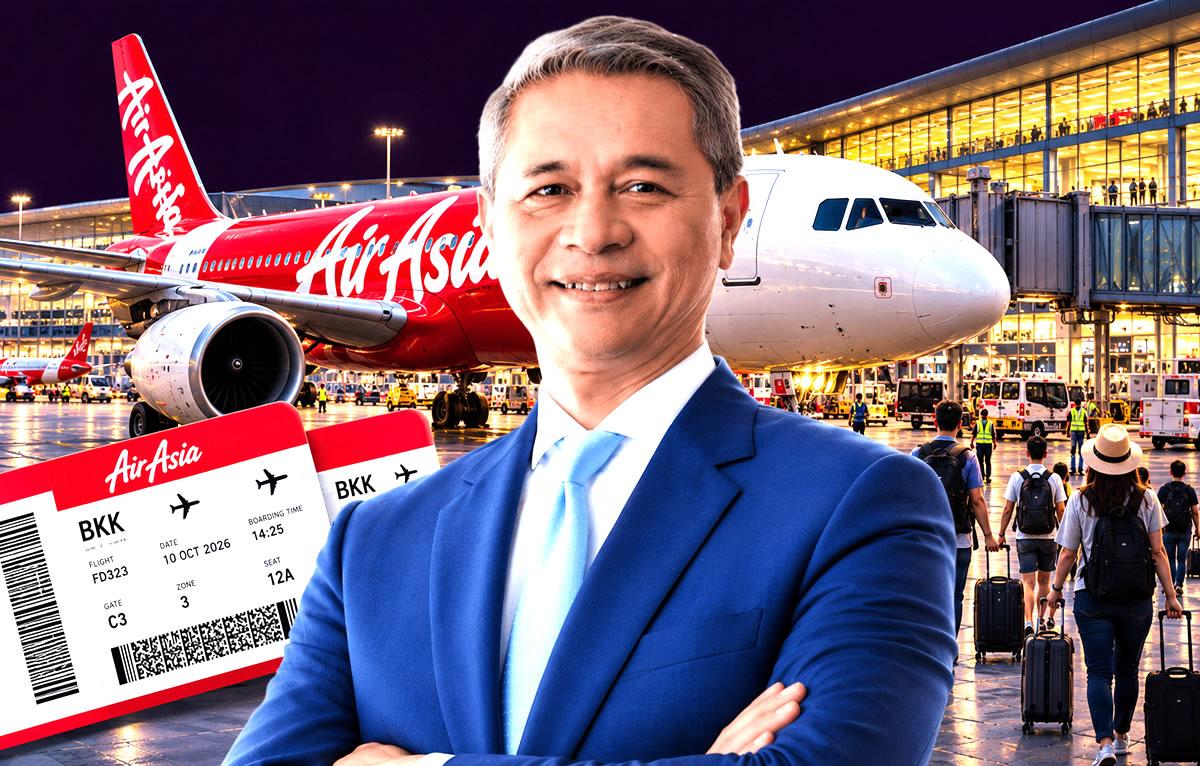
Departures tax pushed by the Ministry of Finance is the death kiss for the tourist sector say top execsThai AirAsia chief Tassapon Bijleveld warns a ฿1,000 departure tax could cut flights as tourism falters. Travel agents fear ฿150 billion in losses amid falling arrivals. (Source: Thai Air Asia)

Thai AirAsia executive chairman Tassapon Bijleveld has warned that Thailand’s proposed ฿1,000 departure tax could undermine international flights and tourism. His intervention comes as the country’s foreign tourism recovery continues to disappoint.

Meanwhile, industry leaders estimate that the measure could cost Thailand up to ฿150 billion annually in lost tourism receipts. New government figures show just 23.94 million foreign arrivals by 10 October, with weekly numbers falling 7.49%.

Finance Minister Ekniti Nitithanprapas is pursuing the tax despite Thailand’s failure to regain its pre-pandemic tourism business. Seven years after welcoming almost 40 million foreign visitors, the kingdom remains hundreds of billions of baht short of its former annual tourism earnings.

Tassapon warns departure tax could cut international flights as government plans more tourist taxes​

Tassapon, executive chairman of Asia Aviation, which operates Thai AirAsia, has criticised the government’s proposed departure tax. His intervention reflects concerns across the Airlines Association of Thailand, representing seven carriers.

The airlines fear higher charges could weaken passenger demand and undermine the economics of international routes. Consequently, fewer outbound passengers could make services less profitable, prompting carriers to reconsider flight frequencies and destinations.

The concern extends beyond Thai passengers travelling overseas. Airlines depend on sufficient demand in both directions to sustain international services. Therefore, weaker outbound traffic could reduce the number of seats available to foreign tourists entering Thailand. Such reductions would affect an industry still struggling to rebuild its international business.

Meanwhile, Finance Minister Ekniti Nitithanprapas is overseeing proposals for a ฿1,000 departure tax affecting Thai nationals and foreigners. Separately, the government is considering a ฿450 entry fee for international tourists.

Both would add to existing airport charges, including the ฿1,120 international passenger service charge at Airports of Thailand facilities. If all three applied to an eligible traveller, the combined amount would reach ฿2,570.

Läs hela artikeln här : Departures tax pushed by the Ministry of Finance is the death kiss for the tourist sector say top execs - Thai Examiner

Mvh isan lover
 
Hej

Departures tax pushed by the Ministry of Finance is the death kiss for the tourist sector say top execs​

October 16, 2026 at 10:27 pm

Thai AirAsia sounds the alarm over a ฿1,000 departure tax as Thailand’s tourism recovery stalls again and dives. Foreign arrivals reach just 23.94 million, ASEAN demand drops 20%, and travel agents warn of ฿150 billion in lost spending. Yet more taxes are on the table for an industry that never recovered from the 2020 shutdown.​

Thai AirAsia chief Tassapon Bijleveld warns that Finance Minister Ekniti Nitithanprapas’s proposed ฿1,000 departure tax threatens international flights and Thailand’s ailing tourism industry. Travel agents fear losses of up to ฿150 billion annually against projected tax collections of just ฿45.9 billion. Meanwhile, foreign arrivals have reached only 23.94 million, with weekly numbers falling 7.49%. Tourism receipts remain ฿360 billion below 2019 levels, while ASEAN arrivals have plunged 20%. Yet the government is considering another ฿450 tourist entry fee. With consultation closing on 29 October, airlines and tourism operators are challenging plans to impose fresh charges on an industry still struggling to recover from the draconian COVID-19 shutdown in 2020.

Departures tax pushed by the Ministry of Finance is the death kiss for the tourist sector say top execsThai AirAsia chief Tassapon Bijleveld warns a ฿1,000 departure tax could cut flights as tourism falters. Travel agents fear ฿150 billion in losses amid falling arrivals. (Source: Thai Air Asia)

Thai AirAsia executive chairman Tassapon Bijleveld has warned that Thailand’s proposed ฿1,000 departure tax could undermine international flights and tourism. His intervention comes as the country’s foreign tourism recovery continues to disappoint.

Meanwhile, industry leaders estimate that the measure could cost Thailand up to ฿150 billion annually in lost tourism receipts. New government figures show just 23.94 million foreign arrivals by 10 October, with weekly numbers falling 7.49%.

Finance Minister Ekniti Nitithanprapas is pursuing the tax despite Thailand’s failure to regain its pre-pandemic tourism business. Seven years after welcoming almost 40 million foreign visitors, the kingdom remains hundreds of billions of baht short of its former annual tourism earnings.

Tassapon warns departure tax could cut international flights as government plans more tourist taxes​

Tassapon, executive chairman of Asia Aviation, which operates Thai AirAsia, has criticised the government’s proposed departure tax. His intervention reflects concerns across the Airlines Association of Thailand, representing seven carriers.

The airlines fear higher charges could weaken passenger demand and undermine the economics of international routes. Consequently, fewer outbound passengers could make services less profitable, prompting carriers to reconsider flight frequencies and destinations.

The concern extends beyond Thai passengers travelling overseas. Airlines depend on sufficient demand in both directions to sustain international services. Therefore, weaker outbound traffic could reduce the number of seats available to foreign tourists entering Thailand. Such reductions would affect an industry still struggling to rebuild its international business.

Meanwhile, Finance Minister Ekniti Nitithanprapas is overseeing proposals for a ฿1,000 departure tax affecting Thai nationals and foreigners. Separately, the government is considering a ฿450 entry fee for international tourists.

Both would add to existing airport charges, including the ฿1,120 international passenger service charge at Airports of Thailand facilities. If all three applied to an eligible traveller, the combined amount would reach ฿2,570.

Läs hela artikeln här : Departures tax pushed by the Ministry of Finance is the death kiss for the tourist sector say top execs - Thai Examiner

Mvh isan lover
Lite vanlig gammal hederlig thai logik här ”När kunderna sviker, höj priset” :laugh2:
 
Att hotellen i Pattaya har många lediga rum råder det nog ingen tvekan om. Fotot tagit i går på soi Diana.

20261016_165600.webp
 
Inte för att det är en nyhet att det enda du gör på det här forumet är att copy and paste, ja, förutom tågfoton....

Men om du nu vill bidra med något i den här tråden kan du i alla fall sluta posta låsta artiklar. Men som sagt, det är ju min synpunkt.

Trevlig dag, eller ska jag kanske skriva: tågresa..........
 

Thailand delays 1,000-baht overseas travel tax​

Thailand has put plans for a 1,000-baht charge on every overseas trip on hold, Finance Minister Ekniti Nitithanprapas said on Thursday 22 October 2026.

The proposed tax had been under public consultation by the Revenue Department and would apply to people travelling out of Thailand. The government has delayed it while assessing economic conditions and the impact of elevated energy prices linked to the war in the Middle East.

Ekniti, who is also a deputy prime minister, said it would not be appropriate to add further costs at a time when energy expenses could affect both aviation and tourism.

Relief for departing travellers

For residents, expats and long-stay visitors, the postponement means there will be no immediate new 1,000-baht charge when leaving Thailand for a holiday, business trip or return journey overseas.

The proposed levy would also have affected foreign tourists departing Thailand after their visit, as well as Thai travellers. Ekniti said bringing in the tax now could place an added financial burden on the public and airlines.

No new date for introducing the measure was given. The Revenue Department had been seeking public views on the proposal before the government decided to pause it.

Tourism momentum a key concern

The minister said Thailand's hosting of the 2026 IMF-World Bank Annual Meetings had enhanced the country's image and created interest among international visitors in returning.

He also referred to feedback received during the APEC meeting, where, he said, many people had expressed an intention to visit Thailand again.

The government expects tourism to remain strong in the fourth quarter of 2026 and wants to preserve that momentum. Higher energy prices could raise operating costs for airlines and have wider effects on the tourism sector, Ekniti said.

Government to monitor conditions

Ekniti said the government wanted first to evaluate the economy and the consequences of high energy prices before moving forward with the travel tax.

The decision reflects concern that additional charges could weaken travel demand at a time when Thailand is seeking to maintain international visitor interest and support its aviation industry.

 
Jag minns att jag betalade 500 eller 1000 baht kontant när jag skulle åka hem från Thailand första gången 1990. Det var rena turen att jag hade råd med det. Jag var solo, nitton år och hade ingen aning om denna utgift.

Någon som minns det exakta beloppet?
 
Jag minns att jag betalade 500 eller 1000 baht kontant när jag skulle åka hem från Thailand första gången 1990. Det var rena turen att jag hade råd med det. Jag var solo, nitton år och hade ingen aning om denna utgift.

Någon som minns det exakta beloppet?

Brukade vara kaos eftersom inga turister hade kvar några kontanter (man gjorde ju slut på dom innan man kam till flygplatsen och dom tog inte kort eller annat. Alla sprang runt och frågade om någon hade de 500 baht som krävdes

Tror det var när man höjde sedan till 750 har jag för mig som man bakade in det i biljetten istället och där har det legat sedan dess. Möjligt att dom höjt till 1000 baht
 
När bakades avgifterna ihop med biljetten? Har inget minne av det. Satte min fot i Thailand första gången 2006. Suvvan var nyöppnad så har aldrig varit på Don Mueng heller.


Liknande trådar

 
Tillbaka
Topp